

We were lucky enough to attend the Blacks and Whites’ Carnival in Pasto and we can tell you one thing: it’s CRAZY!
The Carnaval de Negros y Blancos is the most beautiful carnival in Colombia (and by far) and if you have the chance to be in Colombia in the first days of January it is, in our opinion, an event you really shouldn’t miss.
In this article we tell you all about our experience during the Blacks and Whites’ Carnival and all the information to be able to take part in it. It will also be an opportunity for you to discover the incredible department of Nariño which offers an incredible cultural and natural diversity as only Colombia can.
Content
- Our experience at the Blacks and Whites’ Carnival
- January 3 – Canto a la tierra
- January 4 – Artists’ workshops
- January 5 – Dia de Negros
- January 6 – Dia de Blancos
- Contact a local guide
- Dates of the Blacks and Whites’ Carnival
- Price of the Carnaval de Negros y Blancos
- How to participate in the Carnival
- How to get to Pasto
We were fed up with paying fees abroad
So for several years now, we’ve been using a free bank debit card specially designed for travelers, and we don’t pay any more fees abroad – no more!
The Travel insurance we recommend in Colombia
We live in Colombia, and we can confirm that private healthcare is very expensive here. Private clinics in Colombia generally only admit patients who have insurance.
Coverage up to 2.5 M€ · 24/7 assistance in english · Hospitalization · Medical evacuation · Luggages
Excellent · 4,6/5 · Trustpilot · 1 599 review
Our experience at the Blacks and Whites’ Carnival
The most beautiful carnival in Colombia
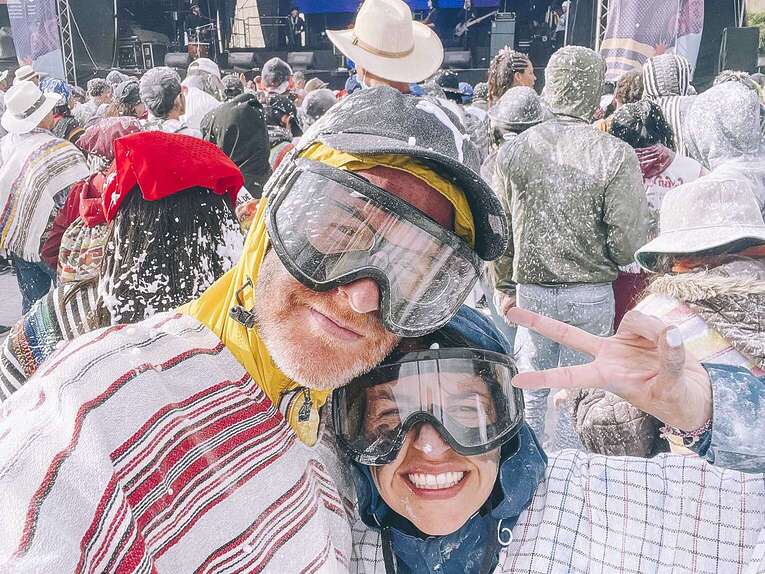
We arrived on January 2 in Pasto by plane from Bogotá. The airport located outside the capital of Nariño is known for being one of the most difficult to access for airplane pilots and the landing approach is likely to cause many disturbances. For us, none of that! The arrival between the Andes mountains that get closer and closer is impressive and beautiful, that’s for sure.
We take a bus toward the Pasto terminal where taxis are waiting to take us to our hotel, at Fernanda and Simon’s, located a stone’s throw from Nariño square in the heart of the city.
To tell the truth, although we have wanted to come to the Carnaval de Negros y Blancos for years, we do not really know what to expect. Fernanda and Simon will be great at advising us to explain how the carnival works, the pitfalls to avoid and above all, the proper outfit to wear!
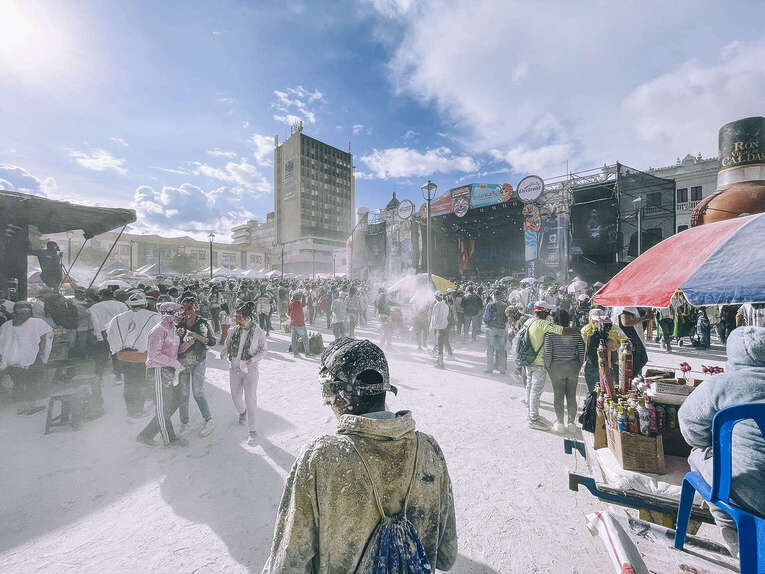
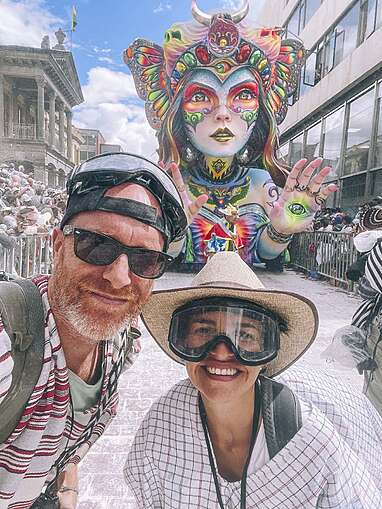
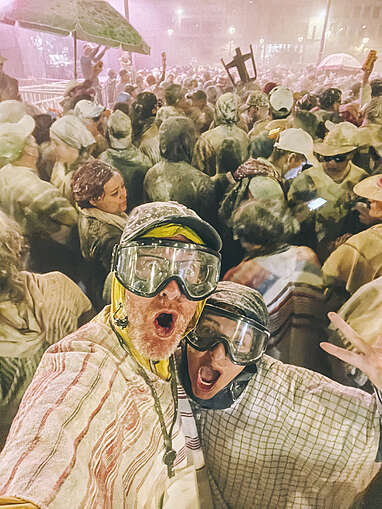
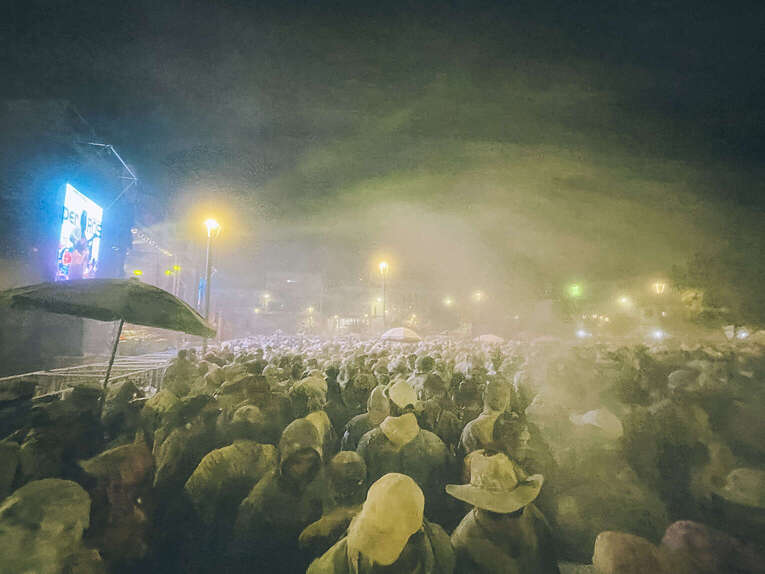
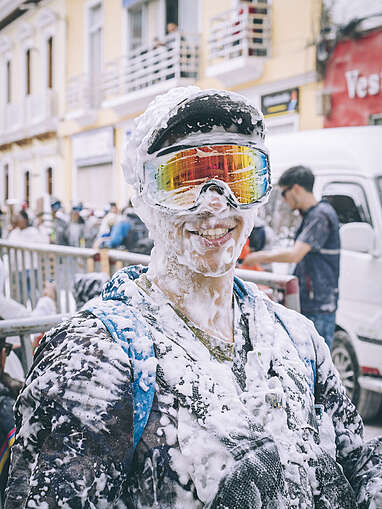
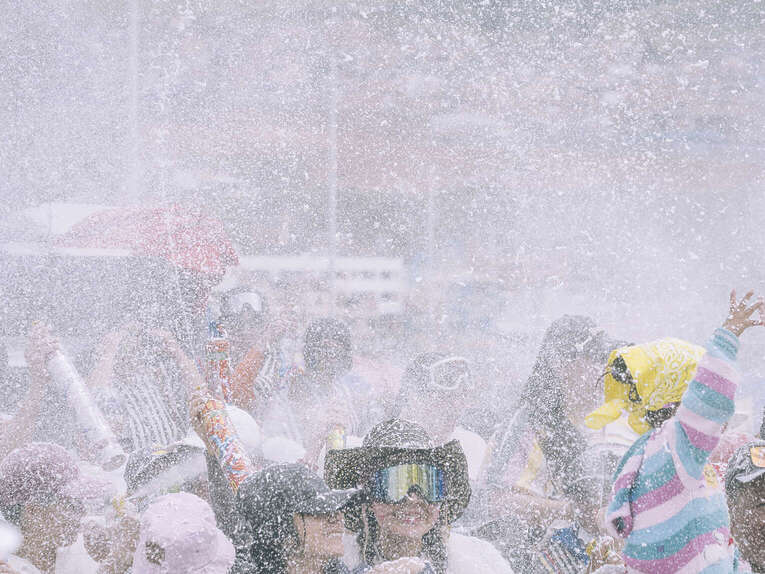
First step, buy a poncho and ski goggles to be able to protect ourselves as best as possible. Then we go enjoy the first concert of the evening in the square. As soon as we leave the hotel, the tone is set. It’s war! With our clean outfits, we are ideal targets and it won’t take 5 minutes to receive the first blasts of carioca foam, the first paint on our faces and the first swirls of talc.
There are three types of carnival-goers: those who attack and are ready for battle, those who receive but are ready to fight back, and the zen masters who do not enter into conflict even if they are attacked. We opted for the third solution. Accepting to be attacked with a smile without retaliation was our kind tactic to avoid ending up covered from head to toe! It works.
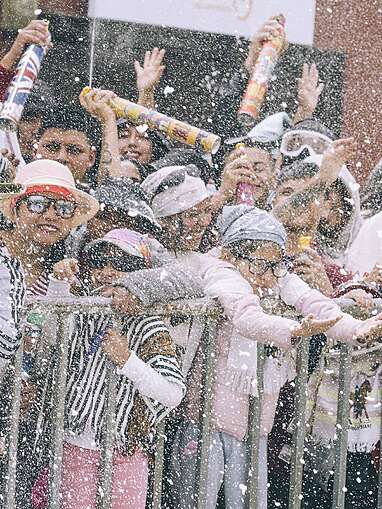
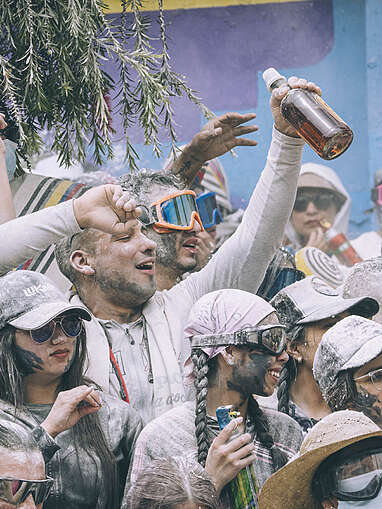
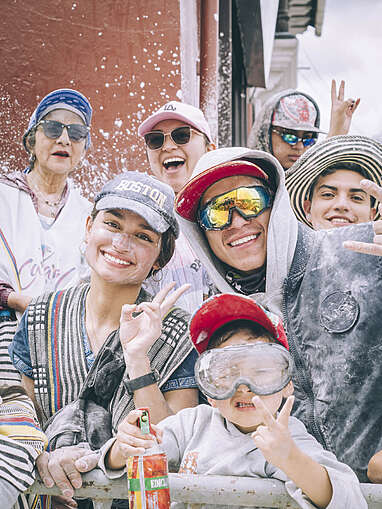
During these 4 days of Carnival we were really impressed by the atmosphere that reigns everywhere in the city. It’s a huge celebration, it’s excitement everywhere, concerts almost all day long until the evening, the whole city is completely covered with white talc that people throw at each other all day. During each trip, you’re never safe from being caught in a battle! But all of it in an overall friendly atmosphere.
The parades on January 3 and January 6 are truly sublime (with a preference for the one on January 3). In short, for us, the Blacks and Whites’ Carnival is an event to experience at least once in your life!
Good to know
History of the Carnival
The first accounts of festivities in Pasto date back to the 16th century and would be directly linked to the rituals of Indigenous peoples to thank the earth for the year’s harvests. These rituals gave rise to dances with masks and costumes. After the arrival of the Spaniards, these celebrations led to a sort of protocarnival born from religious syncretism, where the Virgin (Virgen de las Mercedes) was celebrated.
It was only toward the end of the 19th century that the beginnings of what would become the Carnaval de Negros y Blancos took shape: first by integrating on January 5 the Juego de Negros coming from Popayán around 1890, then on January 6 the Juego de Blancos around 1910.
It was only in the 1920s, after the Thousand Days’ War and the independence of Panama, that the Blacks and Whites’ Carnival took the form we know today. “It is essential to understand how the carnival was used to generate a process not only of social cohesion, but also of creating regional identity.” (source: “El Palenque Lúdico” – Diego Fernando Coral Salas – INCAH 2023)
It is at this time that the “students’ festival” was created, which added typical elements of a Carnival, with parades, comparsas (groups of dancers and musicians), masquerades (costumes), election of the Carnival queen, etc.
Favorite things to do
Live the Carnaval de Negros y Blancos to the fullest
Pablo’s agency offers to help you experience the best of the Carnival with seats for the parades, assistance, visits to artists’ workshops and visits to the most well-known sites of the department (Las Lajas, Laguna de la Cocha).
January 3 – Canto a la tierra
The most beautiful parade of the Blacks and Whites’ Carnival
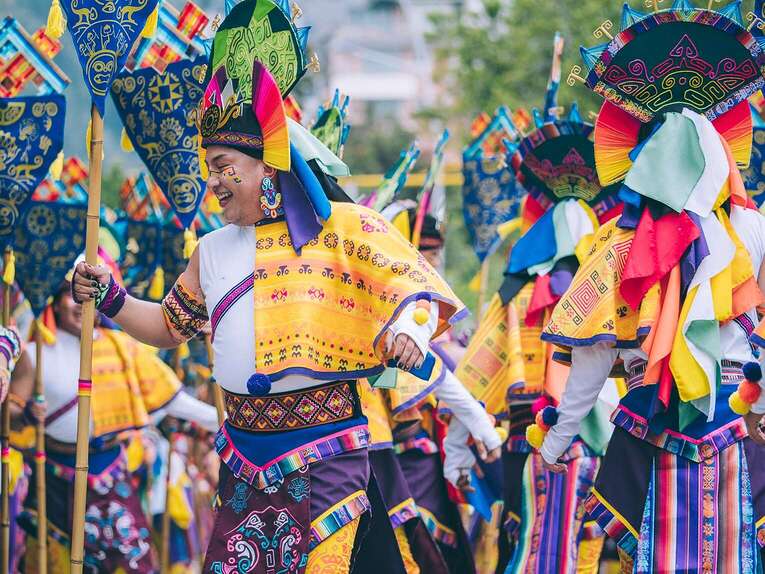
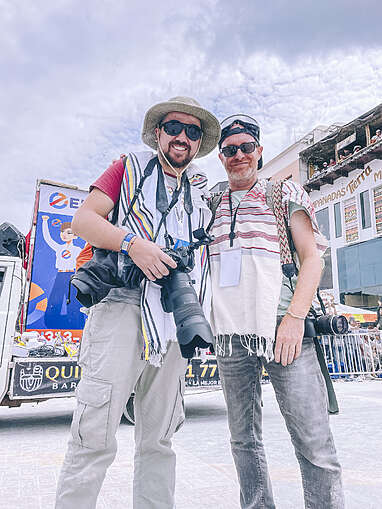
It’s the big day! It is January 3 and it is the day of the “Canto a la Tierra” (Song to the Earth) parade. The one we are eagerly waiting for. We are lucky to be accredited to be able to move inside the “senda” (the parade route).
Thanks to our friend Pablo (photographer from Pasto), we choose a privileged spot that will allow us to admire and photograph one by one all the groups participating in this tribute to the Earth and to Indigenous cultures.
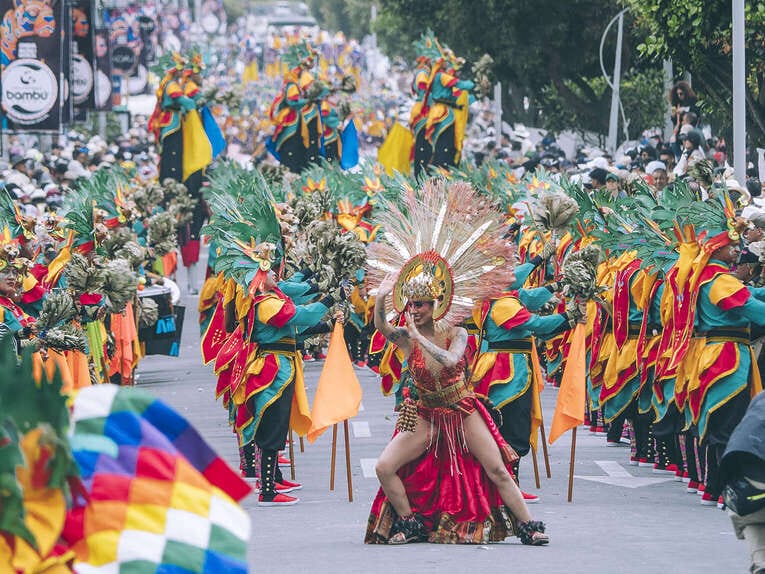
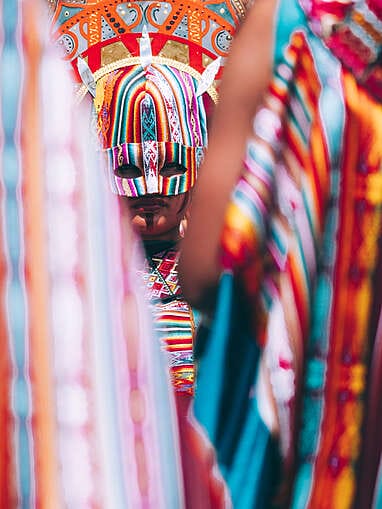
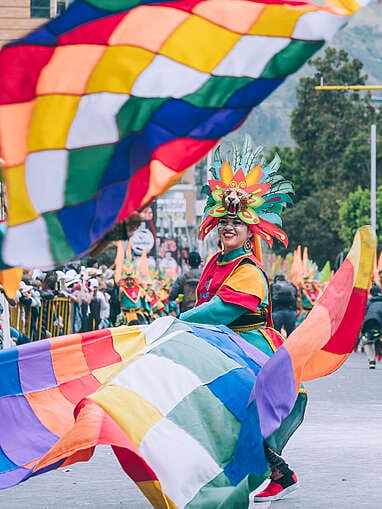
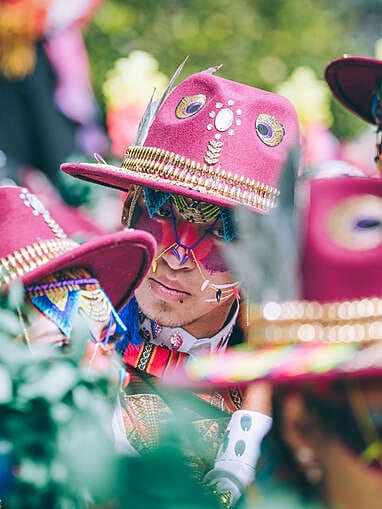
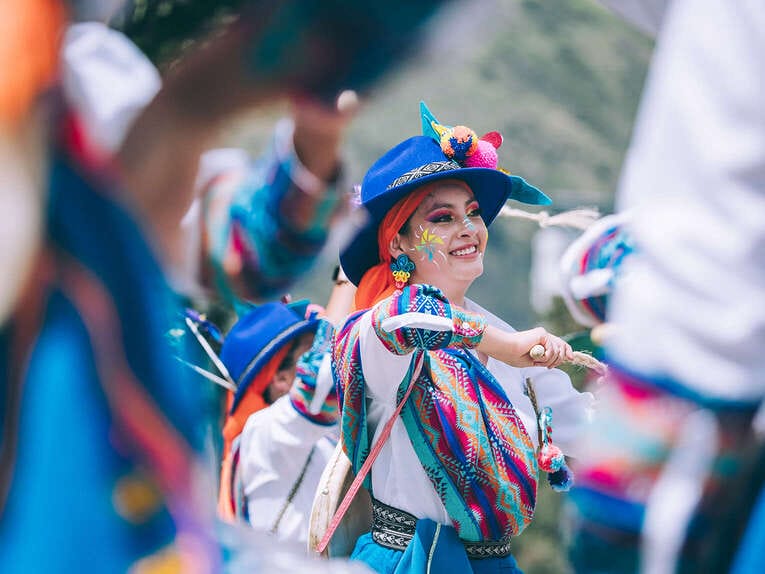
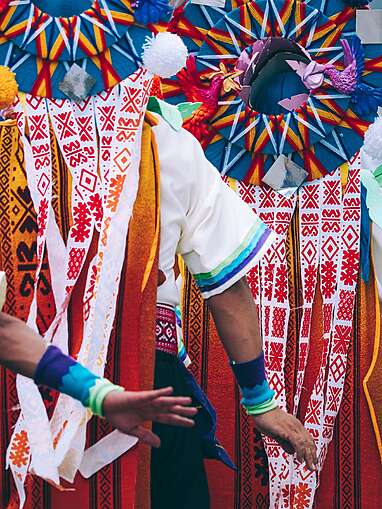
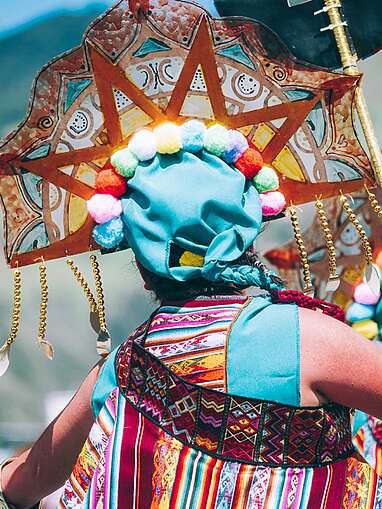
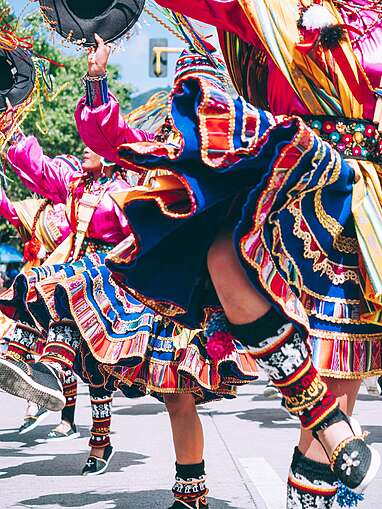
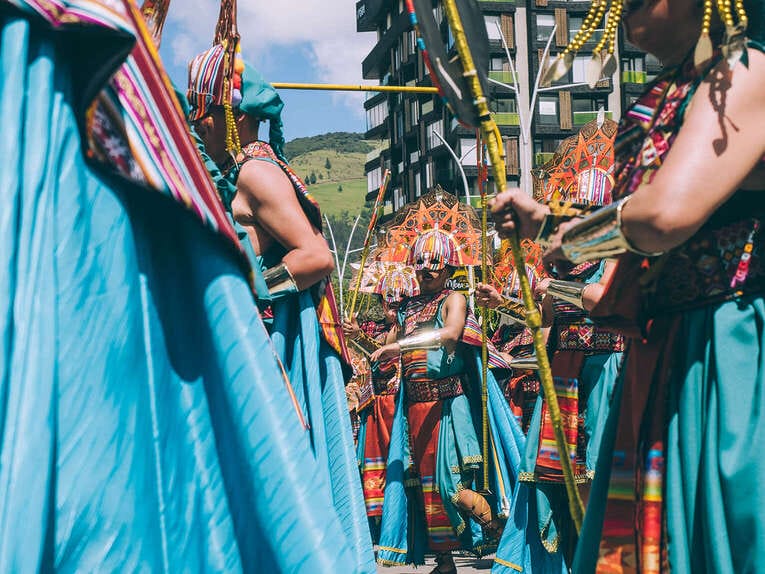
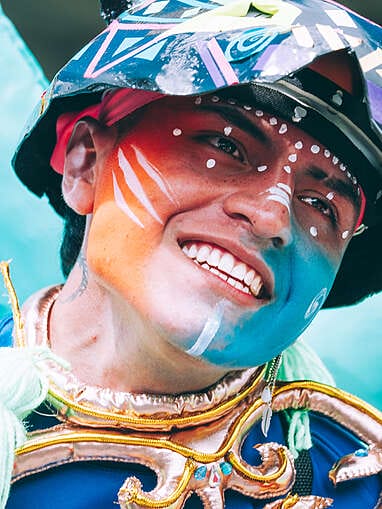
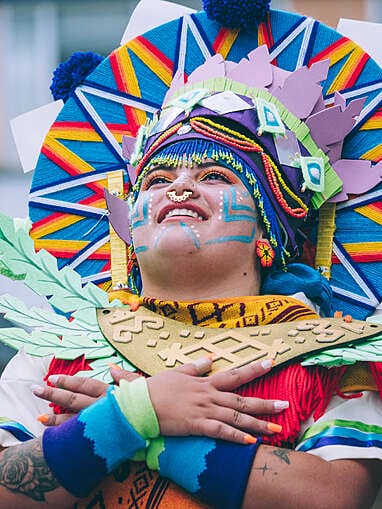
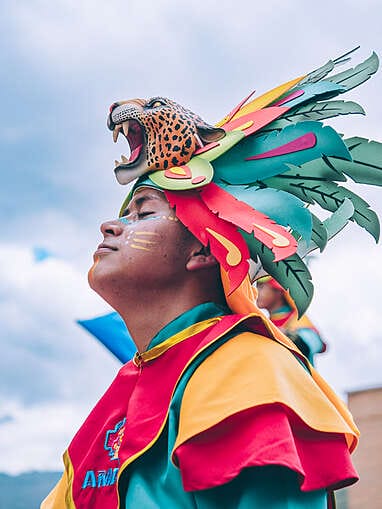
It is a magical moment! The “Canto a la tierra” parade is truly incredibly beautiful. The quality of the music, the choreographies, and the costumes is simply exceptional. Few words can describe this event, you have to experience it.
We were totally captivated by the beauty of this parade not to be missed under any circumstances. For us it is the most beautiful parade of the carnival, a huge favorite!
Good to know
History of the Canto a la tierra
The Canto a la tierra is a parade that was “added” to the carnival program in the mid-2000s to pay tribute to the ancestral cultures of Nariño. It is an ode to the “pachamama” (the mother earth) through dances, music, and songs performed by thousands of participants wearing costumes of exceptional beauty.
Each year a competition is organized to select the choreographic groups that will take part in the parade. In 2024, 12 collectives had been selected representing more than 2000 artists who work all year to create the costumes, work on the choreographies, and the musical scores.
.
Favorite things to do
Live the Blacks and Whites’ Carnival to the fullest
Pablo’s agency offers to help you experience the best of the Carnival with seats for the parades, assistance, visits to artists’ workshops and visits to the most well-known sites of the department (Las Lajas, Laguna de la Cocha).
January 4 – Artists’ workshops
Carnaval de Negros y Blancos
On January 4 the “Castañeda family” parade takes place. It is a more informal parade, without a real theme, without participant selection, where in spirit everyone can take part. It is also a slightly particular day when the “juego” is at its peak. So overall it is a bit of an anarchic atmosphere, a big mess everywhere in the city, and many people take the opportunity to leave the city and visit the surroundings of Pasto.
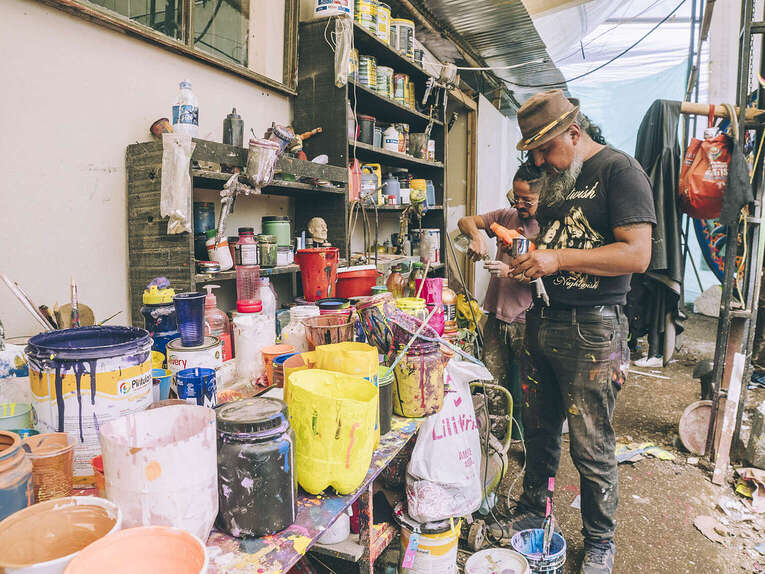
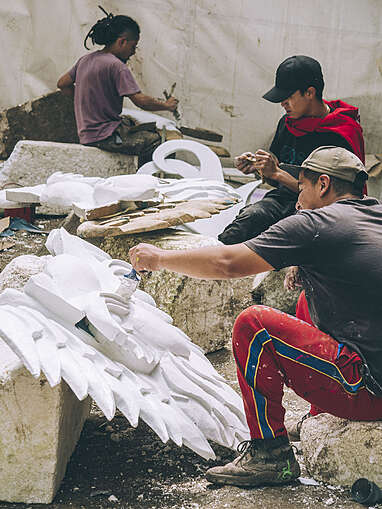
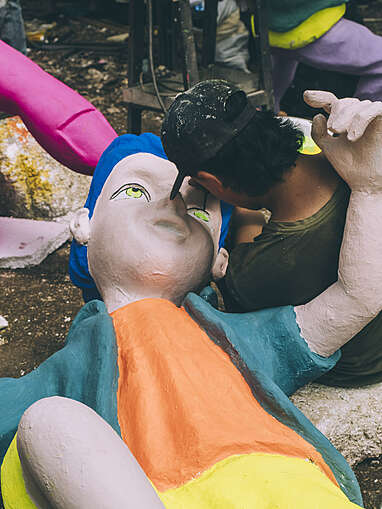
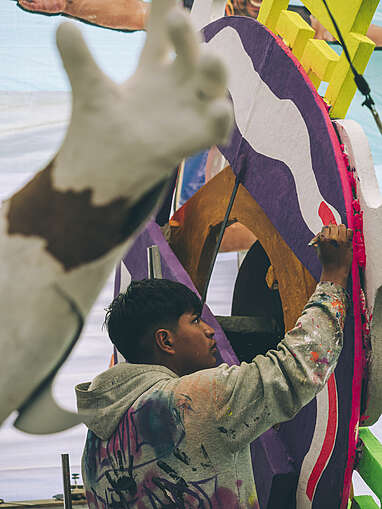
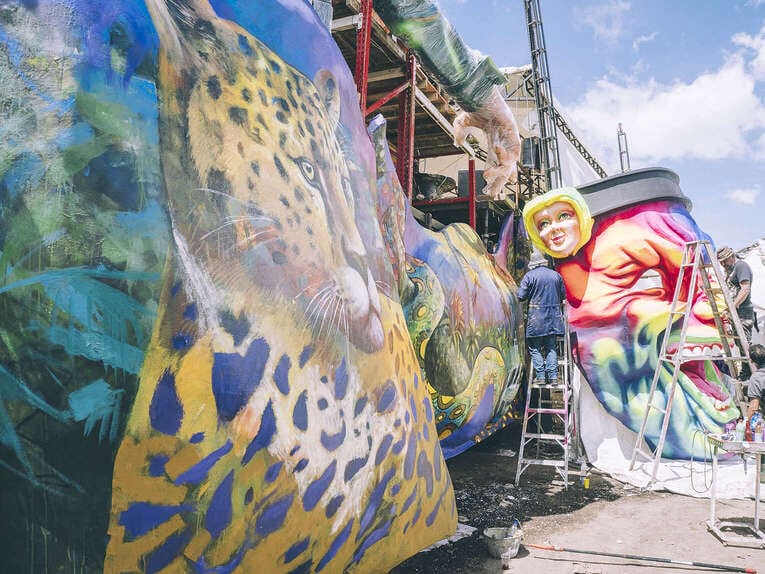
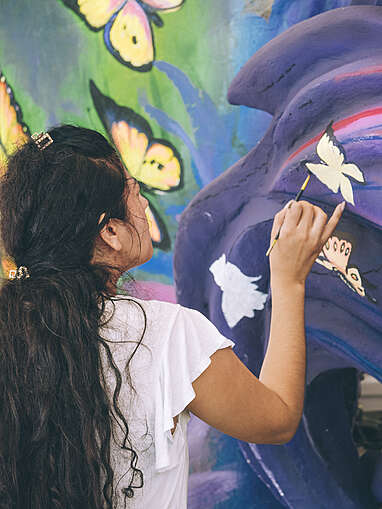
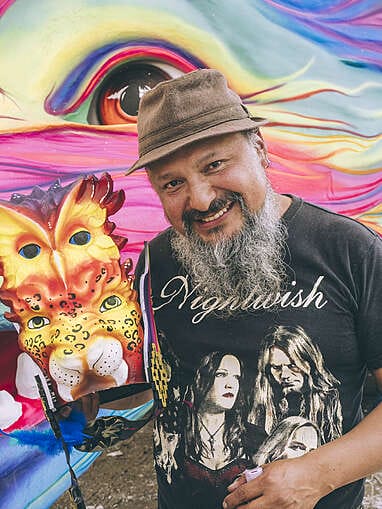
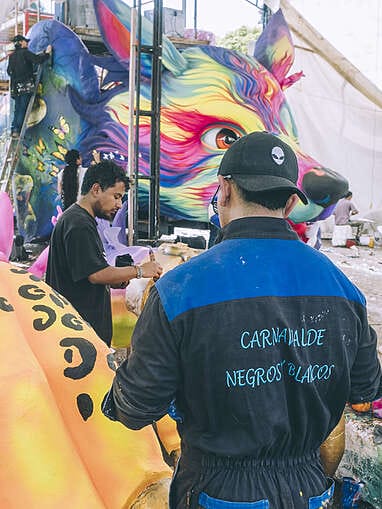
As for us, we will go visit the workshop of maestro Andrés Barrera, busy finishing his float for the grand final parade! Andrés is one of the most recognized artists of the Carnival.
Each year he is one of the favorites to win first place in the competition. When we arrive the workshop is in full excitement, many small hands are busy finishing the last details of paint on the sculpture of the float. The work is impressive! The maestro explains his concept to us, his passion for this tradition that goes back to his childhood…
Good to know
History of the Castañeda family
Legend has it that this tradition goes back to 1928 when inhabitants of Pasto invited a family of fairground workers to come participate in the Carnival.
The story says that in 1928, while a group of young people decided to go have some drinks in a local bar during the carnival, they saw a family coming from the Laguna de la Cocha on their way to the Las Lajas sanctuary.
Seeing pass by, as in the parade, this large family with its cart, its 8 children, its suitcases and its animals, one of the members of the group exclaimed “Que viva la familia Castañeda”!
Incorporated into the Carnival festivities, the arrival of the Castañeda family symbolizes the hospitality and kindness that characterize the Pastusos and the Nariñenses in general, and highlights the traditions of the department and in particular the traditional costumes of the towns and countryside of the 1930s-1950s.
Favorite things to do
Live the Carnaval de Negros y Blancos to the fullest
Pablo’s agency offers to help you experience the best of the Carnival with seats for the parades, assistance, visits to artists’ workshops and visits to the most well-known sites of the department (Las Lajas, Laguna de la Cocha).
January 5 – Dia de Negros
Blacks and Whites’ Carnival
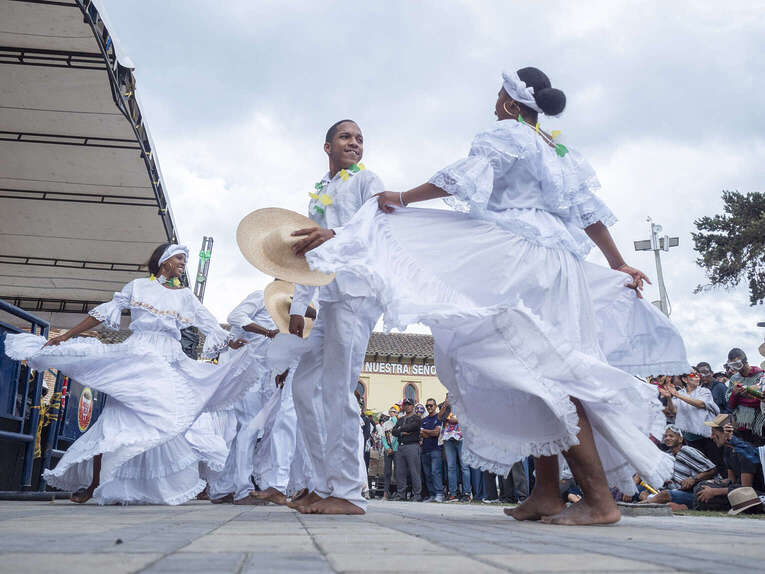
On January 5 it is the Dia de Negros and we are going to enjoy the concerts in Rumipamba Park where music groups from the Pacific from the region around Tumaco take turns performing. We love this music so much and discover new kinds of rhythms and dances.
Traditionally, the Dia de Negros gives rise to the “Juego de Negros” which consists of playing at painting the faces of other participants with black paint. During this day participants respectfully ask others to let themselves have their faces painted with the phrase “una pintica por favor.”
This day is supposed to represent joy and the celebration of a form of fraternity without distinction of ethnicity, belief, or social status.
As explained below, this tradition has its roots in the history of slavery and a revolt that would have given rise to a “free day” for the slaves.
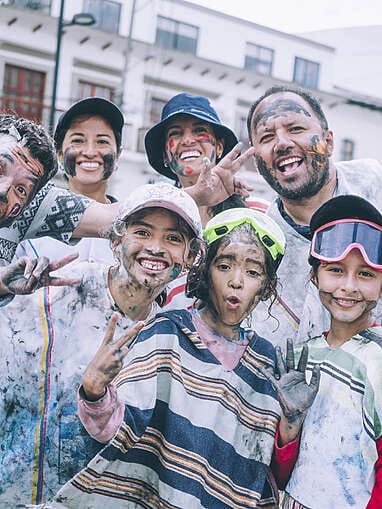
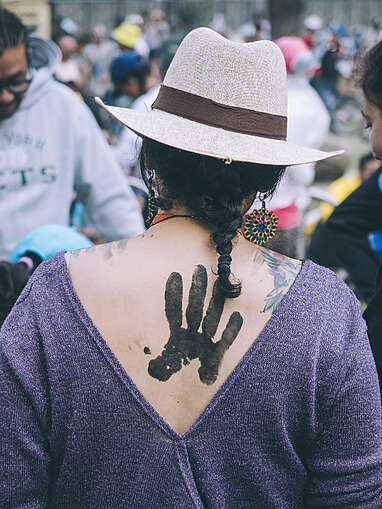
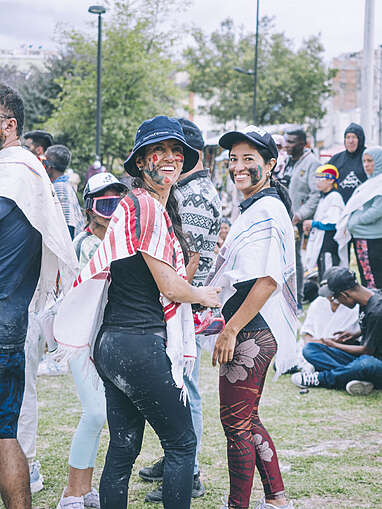
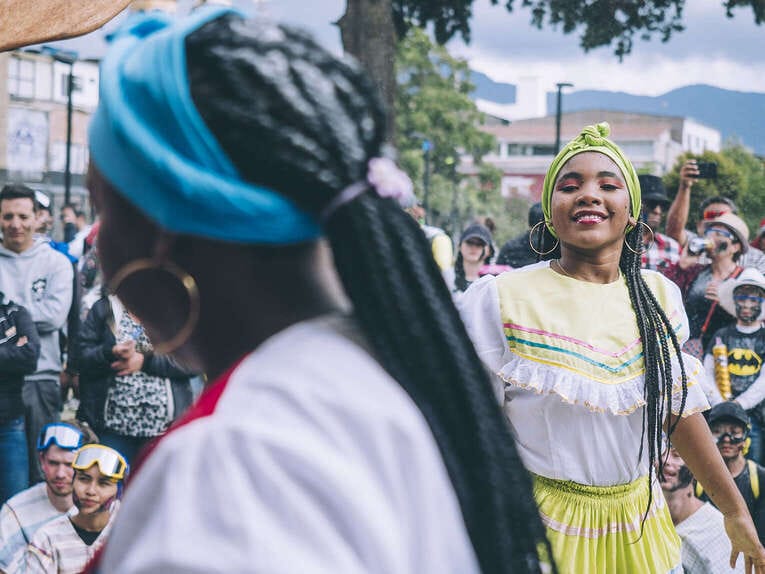
It is only for the past few years that the “Dia de Negros” has been accompanied by tributes to the Afro-Colombian culture of the Pacific with concerts in the city squares. But we are obviously far from the importance given to the “Dia de Blancos.” One can conclude what one wants.
You will have understood, the Blacks and Whites’ Carnival bears witness to the cultural richness and the history of the region, reflecting the fusion of Indigenous, Spanish, and Afro-Colombian traditions.
That said, not all dates of the Carnival carry the same importance:
- The “Dia de Blancos” gives rise to the grand parade of floats and closes the carnival.
- The “Canto a la tierra” was added recently (2005) and gives rise to a sublime parade around Indigenous traditions.
- The “Dia de Negros” does not give rise to any parade.
Good to know
History of the Juego de Negros
January 5 is a day off for Black slaves in Colombia, originating from the Gran Cauca region. It has its origin in a slave rebellion in 1607 in Remedios, Antioquia, which led the Black slaves of Popayán to ask for a day of rest.
The Spanish Crown then granted this day to maintain social peace. The custom of January 5 spread to the south of the country all the way to the city of Pasto, where Black people went down into the streets to dance to the rhythm of African music and paint the white walls of the city in black. Other legends say that the slaves began painting the faces of Indigenous people in black to invite them to join the celebration with them.
This tradition was associated with the Pasto Carnival, known as the “Juego de Negros y Blancos,” starting at the end of the 19th century.
Favorite things to do
Live the Carnaval de Negros y Blancos to the fullest
Pablo’s agency offers to help you experience the best of the Carnival with seats for the parades, assistance, visits to artists’ workshops and visits to the most well-known sites of the department (Las Lajas, Laguna de la Cocha).
January 6 – Dia de Blancos
Carnaval de Pasto
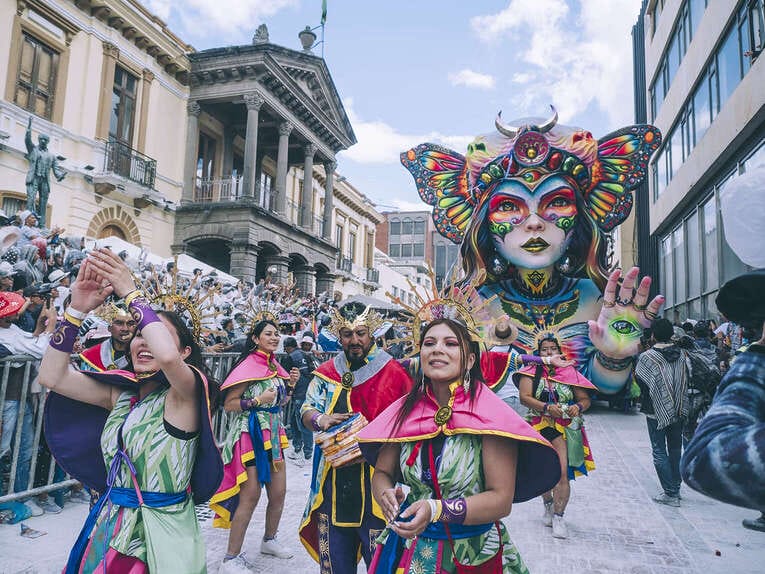
On January 6 it is the grand final parade. Again we are privileged to be able to move freely inside the senda to take photos. We always have to pay attention to our camera equipment which regularly risks receiving all types of projectiles. But when the first floats arrive, the show is impressive!
The January 6 parade closes the Carnival with a grand final parade called the “Desfile magno.” It therefore takes place during the “Dia de Blancos” where the main game consists (as throughout the Carnival, in the end) of throwing white talc at each other’s faces.
The festivities include comparsas and masquerades of costumed musicians and dancers, parades of giant papier-mâché figures, and a parade of huge floats more spectacular than the next.
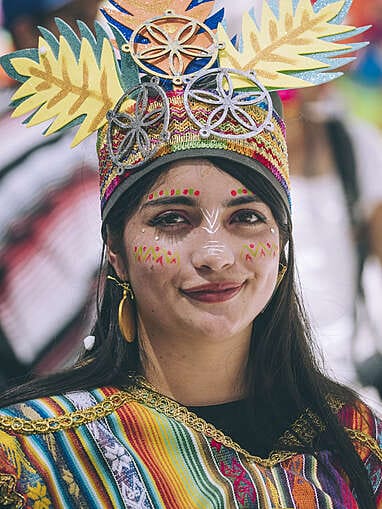
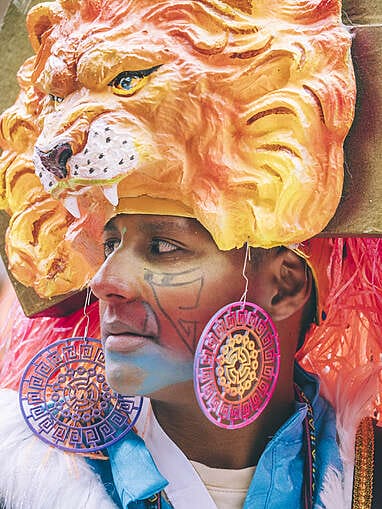
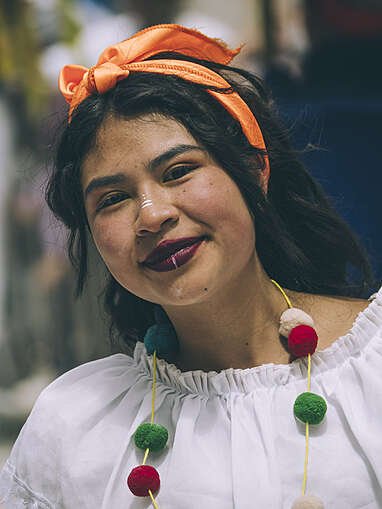
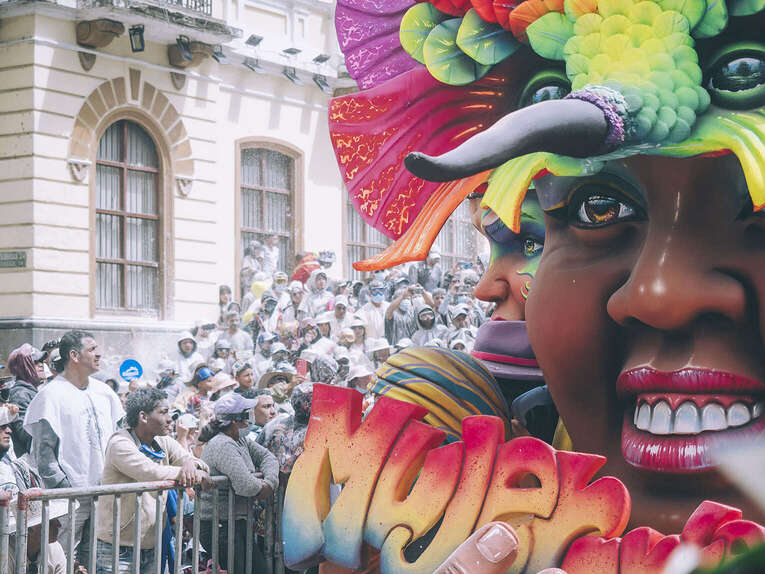
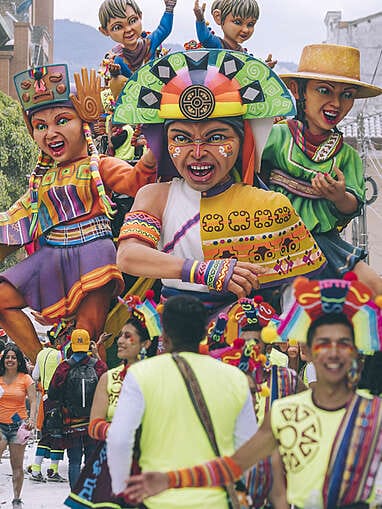
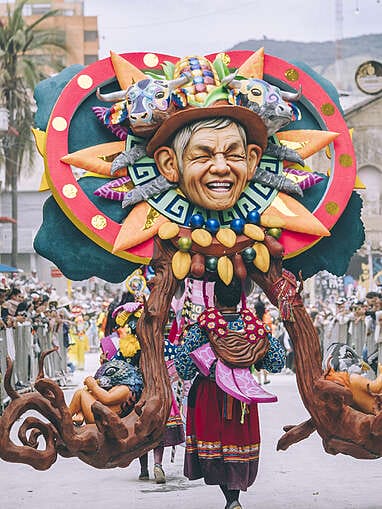
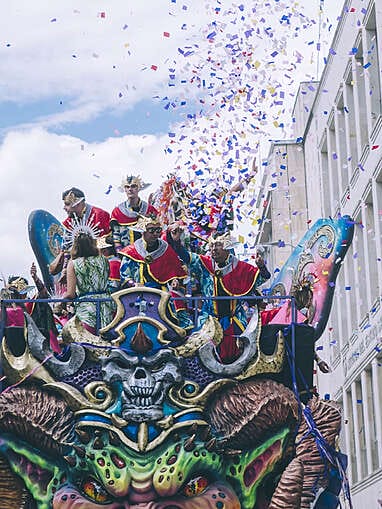
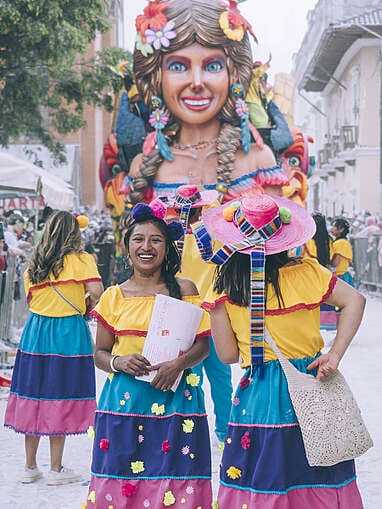
The float parade also gives rise to the contest for the most beautiful float of the Carnival. These floats are subject to a strict selection that takes place a year in advance based on a proposal and then on a day when each participant must show their technique by giving birth to their float concept in miniature format.
Once selected, the maestros get to work to manage to be ready on the big day. The most complex floats require a whole year of work with teams of several dozen people. The floats are often finished at the last minute during the night before the parade!
It is possible during the year to go visit a float workshop and meet these passionate artists who work for the most part for the simple beauty of the art.
This grand parade of January 6 lasts all day and is considered the highlight of the show, the major event that closes the Carnival.
Good to know
History of the Juego de Blancos
The Juego de Blancos is said to have been created in 1912 in a brothel in Pasto. Clients would have taken the French powder compact of one of the women and started throwing the white powder on everyone present while shouting “Vive los Blanquitos!” Then going out into the street, the joke continued with the parishioners leaving the Epiphany mass (January 6) at the San Juan Bautista church, repeating “Long live the Negros and long live the Blancos!” This new game therefore began as a sort of joke in response to the traditional Juego de Negros.
Contact a local guide
Local agency to enjoy the Blacks and Whites’ Carnival
Responsible tourism
Our friend Pablo’s agency promotes beautiful responsible and community-based tourism. All the experiences offered have been designed both to immerse travelers in the heart of the territory and to support small community tourism initiatives. This way you can be sure that each excursion brings you as close as possible to the local populations and that your visit has a positive impact on the local communities.
Dates of the Blacks and Whites’ Carnival
Although the main dates of the Carnival take place in the first week of January, the festivities related to the Carnival begin as early as the end-of-year holidays.
Pre-Carnival dates
- December 28: Pre-carnival (chalk paintings all over the city, concerts, activities)
- December 29: Concert
- December 30: Serenade to Pasto
- December 31: Años Viejos Parade (parade of dolls representing political or other personalities that are burned at midnight to atone for the bad events of the ending year)
Carnival dates
- January 2: Carnavalito (Children’s parade + concerts in the squares)
- January 3: Canto a la tierra (THE most beautiful parade of the carnival + concerts in the squares)
- January 4: Arrival of the Familia Castañeda (More informal parade + Juego at its maximum)
- January 5: Dia de Negros (Juego of painting yourself in black + concerts in the squares)
- January 6: Dia de Blancos and Desfile Magno (Grand final parade + concerts in the squares)
The weekend following the end of the Carnival the trout festival is organized at the Laguna de la Cocha.
The Carnaval de Negros y Blancos is for the most part a free event.
Free events
- Concerts in public squares
- Parades along the “Senda” (route where the parades take place)
So in principle the seats along the “Senda” are also free.
Except that…
Except that there are bleachers with paid seating that are installed at different points of the parade.
Prices of the official bleachers
- January 2: $25,000 COP
- January 3: $80,000 COP
- January 4: $40,000 COP
- January 6: $180,000 COP
Except that there are also many shopkeepers and residents who offer in “wild sale” stools and plastic chairs in front of their house along the “Senda.” These sales are illegal but widely practiced.
Prices of the informal stools and chairs
$50,000 to $100,000 COP
Good to know
Beware of wild-sale seats
The entire “Senda,” the entire 5 km parade route, is closed on both sides of the street. It is therefore not possible to cross it. This means you must be careful to take a “wild sale” seat on the side where you are staying, otherwise you will have to go all the way around the city to get to the other side of the senda and reach your seats.
How to participate in the Carnival
Good to know
Book as early as possible!
The first important thing to know: Book your hotels and transportation as far in advance as possible! During the carnival the city of Pasto is overrun, all hotels are full, the prices of flights to Pasto skyrocket, in short, the earlier you do it the better.
The Pasto Carnival is a free event in itself, but there are many details and customs that are good to know so as not to feel completely lost.
Book your accommodation and transportation as soon as possible
The first important thing: Book your hotels and transportation as far in advance as possible! During the carnival the city of Pasto is overrun, all hotels are full, the prices of flights to Pasto skyrocket, in short, so the earlier you do it the better!
We chose to stay in the very heart of the action, with Fernand and Simon who offer rooms a stone’s throw from Plaza Nariño. Unfortunately during the Carnival they are often fully booked several months in advance, so once again, wherever you stay, plan ahead!
Transportation
During the Carnival, the city is in turmoil. We advise you to stay in the historic center, you will be able to do many things on foot, and take a taxi from time to time to move around certain neighborhoods or go see workshops. All taxi rides in the city center (intramuros) are at a fixed and inexpensive rate.
Program
When arriving, try as quickly as possible to find the Carnival program in order to choose the events you want to take part in: parades, concerts, exhibitions, markets, parties, etc.
You can also consult the official website where the program is up to date: carnavaldepasto.org
or the event’s social media.
The survival kit of the Blacks and Whites’ Carnival
It is important to be ready for the madness of the Pasto Carnival. If you think you can leave your hotel dressed like any other day, you may not survive long outside! For a week Pasto becomes a battlefield where the weapons are talc, cariocas (foam), and paint. So get ready:
- Clothing and shoes that you don’t mind damaging
- Cotton or plastic poncho to receive the worst, you will find them for sale everywhere in the city
- Ski mask to protect your eyes, also offered on every street corner in the city
- Scarf to protect the neck, face, and hair! (a hooded top can also be useful)
- A carioca (foam spray bottles)
- A small jar of water-based body paint if you want
You will see that on site, street vendors are there to provide you with all the kit necessary to have a good Carnaval de Negros y Blancos. And if you think it is optional, good luck!
How to get to Pasto
By bus from Cali
This route passes through Popayán. Beware the section between Popayán and Pasto is often under construction and often blocked, we advise you to inquire well before taking it.
- Price: about $85,000 COP
- Duration: about 10h
- Companies: Cootranar, Transipiales
By bus from Ipiales
This route often has construction or is often blocked, so we advise you to inquire before taking it.
- Price: about $20,000 COP (the buseta leaves when it is full)
- Duration: about 2h
- Companies: Transipiales, Fronteras, Expreso Bolivariano
- Frequent departures all day
By bus from Ecuador
From the city of Tulcán in Ecuador, you will have to take a bus to the border, go through immigration on foot, then take another bus toward Ipiales. You can then continue the route by taking a bus from Ipiales to Pasto.
- Duration Tulcán – Rumichaca: about 30 min
- Price: about $3,000 COP
- Frequent departures all day
In both cases, taxis are also available on both sides of the border.
- Duration Rumichaca – Ipiales: about 15 min
- Price: about $3,000 COP
- Frequent departures all day
Important: do not accept informal transportation services or illegal border crossings.