

The department of Nariño is one of Colombia’s hidden gems that few travellers take the time to visit, yet it’s well worth the stop to discover its richness. Pasto, the department’s capital, is obviously one of the must-sees on a visit to Nariño, and not just during the madness of Carnaval de Negros y Blancos!
Pasto hides many treasures, fascinating museums, spectacular crafts and a history that sets it apart from the rest of the country. A cultural melting pot on the border with Ecuador and Quechua culture, blending colonial and Inca Empire heritage, strong indigenous identity and the confluence of Amazonia, the Andes and the Pacific coast.
Contents
Related posts
- Things to do around Pasto
- Sanctuary of Las Lajas
- Laguna de la Cocha
- Pastos indigenous cultural experience
- Rio Ñambi Nature Reserve
We were fed up with paying fees abroad
So for several years now, we’ve been using a free bank debit card specially designed for travelers, and we don’t pay any more fees abroad – no more!
The Travel insurance we recommend in Colombia
We live in Colombia, and we can confirm that private healthcare is very expensive here. Private clinics in Colombia generally only admit patients who have insurance.
Coverage up to 2.5 M€ · 24/7 assistance in english · Hospitalization · Medical evacuation · Luggages
Excellent · 4,6/5 · Trustpilot · 1 599 review
Pasto Historic Centre
What to visit in Pasto

Pasto may not be the most beautiful city in Colombia, but surrounded by mountains and dominated by the Galeras volcano, its historic center has a certain charm, with numerous churches and colonial or republican buildings.
The plaza de Nariño is the heart of the city, and it’s pleasant to stroll the streets around it, where you’ll find Pasto’s main monuments.
Pasto is renowned for the sheer number of its churches, so much so that it is also called the “Theological City of Colombia”! These include the Cathedral, of course, but also the Church of San Juan Bautista in the Plaza de Nariño, the Church of San Andrés in the pretty Parc ambiental Rumipamba, the Cristo Rey Temple with its strange statue resembling Lenin, and the Sanctuary of La Merced.


Our local partner offers two completely different guided tours, providing a comprehensive overview of the city’s past and present:
Historical tour of Pasto
Discover Pasto’s churches, carnival museum, Barniz de Pasto workshops (local crafts), and a workshop for making the famous “paila” ice cream.
Pasto Graffiti Tour
A tour to observe Pasto’s murals by various local artists. The tour guide is a local artist and shares his knowledge and stories. At the end of the tour, the artist will present you with an original work created on site.
Good to know
Pasto’s main museums, parks and monuments
- Plaza de Nariño
- Pasto Cathedral
- Church of San Juan Bautista
- Museo del Carnaval de Negros y Blancos
- Museo del Oro
- Parque Ambiental Rumipamba
- Casa de la Cultura de Nariño
- El Museo de Artes y Tradiciones de Taminango
- Cristo Rey and Morro de Pasto
- Barniz de Pasto workshop
- Atelier de
Activities Favourite
Guided tours in Pasto
Henry, our partners in Pasto, will take you on a guided tour of the city’s secrets, including historical tours, gastronomic tours and Graffiti tours!
Gold Museum
What to do in Pasto

Pasto’s Gold Museum presents the heritage of the indigenous cultures that have occupied the department for some 2,500 years.
In the vast border zone between Colombia and Ecuador, archaeologists have identified two major regions of pre-Hispanic human occupation: the Pacific coast and the Andean highlands. The diversity of these landscapes shaped the social organization, economy and worldview of these peoples.
At the end of the 15th century, the Incas attempted to conquer the regions north of Quito as far as the Nariño highlands. New trade networks were developed along the “Qhapaq Ñan” (Inca road), but also forced entire communities to migrate.
The Inca invasions were followed by those of the Spanish Empire, which from 1536 onwards reorganized ethnic groups into villages, mandates and reserves, thus overturning their social organization, territories and beliefs. Some languages and traditions disappeared, while others survived but were transformed.
The Pasto Gold Museum’s permanent collection features ceramics, goldsmiths’ and silversmiths’ work, stone, wood and textiles from the Tumaco, Quillacingas, Sucumbíos, Mocoas, Masteles, Abades, Pastos, Barbacoas and Sindaguas civilizations.
The museum is divided into three main halls, allowing visitors to discover the lifestyles, cosmovisions and interrelationships of these societies.
The museum also pays tribute to contemporary indigenous communities struggling to preserve their precious culture.
- Opening hours: Tue-Sat 10am-5pm
- Admission: free
- Address: Calle 19 #21-27
Carnival Museum
What to do in Pasto

The Museo del Carnaval de Negros y Blancos de Pasto (PastoCarnival Museum of Negros and Whites ) enables visitors to Pasto outside the Carnival period (early January) to discover the full richness of this incredible event all year round.
It’s a permanent exhibition space showcasing the popular art expressed during the Carnaval de Negros y Blancos.
It features emblematic works by the great masters who have made the various editions of the Carnival such a success.
The Carnival Museum is divided into two areas:
- Photographic exhibition : tells the story of Carnival and its raison d’être
- Exhibition of Carnival works: mannequins, costumes, bands, floats and all references to the various parades
- Opening hours: Mon-Fri 8am-12pm, 2pm-5pm, Sat 8am-12pm
- Admission: free
- Address: Calle 19 #43-22 Pandiaco
Taminango Museum
Things to do in Pasto

Declared a national monument in 1971, the Taminango Museum is housed in a beautiful colonial-style house. It is one of the most representative showcases of the crafts and traditions of the department of Nariño.
The Taminango Museum’s permanent collection features :
- Dr. Leopoldo López Álvarez’s Greek-style printing press
- Wood carving
- Barniz de Pasto
- Wool weaving
- Paja toquilla weaving
- Cabuya weaving
- Metalwork
- Medicinal plants
- Objects in cacho and tagua
- Stone carving
- Opening hours: Mon-Fri 8am-12pm, 2pm-5.30pm, Sat 9am-12.30pm
- Price: $5.000 COP
- Address: Calle 13 # 27 – 67 Barrio San Felipe
What to do in Pasto

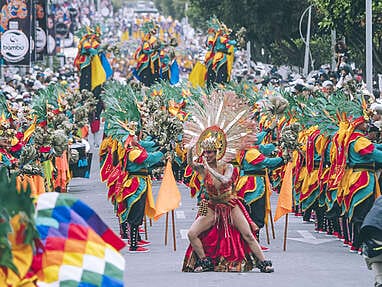
Carnaval de Pasto is a must-attend event if you’re in Colombia in early January. For a week, it’s madness not only in Pasto, but in the whole department of Nariño. All the villages celebrate Carnival with the same “weapons”: talcum powder, water-based paint and Carioca (foam spray)!
So pack your least fragile clothes, buy a protective kit (goggles, mask, poncho, etc.), and enjoy this exceptional atmosphere and the many concerts taking place all over town.
But the beauty of the Carnaval de Negros y Blancos is, of course, its grand parades:
- The “Canto a la tierra” parade on January 3 is for us the most beautiful of all.
- The “Desfile Magno ” on the last day, January 6, is also incredible, and is the highlight of the show with its huge, impressively beautiful floats.


But even outside the Carnival period, you can learn more about this extraordinary event at the Carnival Museum and visit the studios of the artists who work all year long to prepare the next edition.
Every year it’s the same program:
- january 2 – Carnavalito: children’s parade
- january 3 – Canto a la tierra: the most beautiful parade celebrating Nariño traditions
- january 4 – Familia Castaneda: informal parade, a day dedicated to “Juego”
- january 5 – Dia de Negros: tribute to Afro-Colombian traditions
- january 6 – Dia de Blancos / Desfile Magno: grand final parade with floats
Featured activities
Live the Carnaval de Negros y Blancos to the full
Our local partner in Pasto offers a 4 or 5-day package for total immersion in the carnival, with tickets for parades, accompaniment to make sure you don’t get lost, visits to the department’s best-known sites (Las Lajas, Laguna de la Cocha) and visits to artists’ studios.
Coffee tasting
Activities around Pasto

Nariño coffee is considered one of, if not THE best coffee in Colombia. Almost every year, coffees from the department win awards at major international competitions.
In the historic center, a few steps from Plaza de Nariño, you’ll find Café el Obraje, which a few years ago won the “World’s Best Coffee” award. Inside you’ll find a cosy space for drinking one of Nariño’s finest coffees.
Our local partner in Pasto, meanwhile, offers a great tasting experience based around special coffee (high quality coffee), including a visit to a processing laboratory and the discovery of three types of coffee from the Nariño mountains prepared using three different filtration methods. These coffees are grown by peasant families demobilized or displaced by armed conflict.
Featured activities
Nariño coffee tasting experience
Henry offer a wonderful experience based on the special Nariño coffee produced by ex-combatants or families displaced by the armed conflict
Gastronomy in Pasto
Discoveries in Pasto

Pasto is fast becoming one of Colombia’s gastronomic capitals. And we’re not just telling you this because we had one of the best cooking experiences of our lives there, but also because the city’s culinary offering is impressive, and the number of young chefs developing ambitious gastronomic projects is growing all the time.
Pasto is renowned for its traditional dishes and products:
- Cuy (guinea pig)
- Paila” ice cream (ice made in a copper container)
- Amasijos” (corn flour products)
- Tubers you’ve never heard of (Cubios, Chuguas, Ibias…)
- Hervidos” (alcoholic fruit infusions),
Good to know
Papas nativas
A side note on the queen of tubers, the potato: 118 types of “native” potato have been identified in the department of Nariño! Unfortunately, you won’t find many of them on the market stalls.
A number of gourmet restaurants and young chef projects have sprung up in Pasto in recent years. These include
- La Vereda
- Migrante
- Taller de amasijos
Good to know
Le Cuy
Impossible to eat for some, the most delicious dish in the world for others, Cuy leaves no one indifferent. In Pasto’s specialized restaurants, it is cooked on a spit over a wood fire and turned by hand, one by one.
Cuy is traditionally raised in the region’s indigenous Pasto communities. It is an animal with a special place in the Pasto household and cosmovision. It is at once food, pet, currency, medicine, and offering or gift of thanks.
Favorite activities
Pasto Gastronomic Tour
Our local partner will take you from Pasto’s market to the city’s best restaurants on a tour like no other, sure to tantalize both taste buds and curiosity!
Crafts in Pasto
Discoveries in Pasto

You may know this if you’ve been following our adventures around Colombia, but we’re in love with Colombian handicrafts. Whenever we can, we visit artists’ studios and make a point of highlighting their fantastic and often little-acknowledged work.
Nariño is an exceptional department in this respect!
Barniz de Pasto
Derived from the Amazonian mopa-mopa plant, there’s something magical about the material used in the Barniz de Pasto crafts. The process of transforming it into a colorful, elastic sheet is simply breathtaking. The meticulousness and patience required to produce the raw material and then cut it into tiny pieces to be attached to wooden objects with tweezers is incredible.
La Paja Toquilla
Paja Toquilla handicrafts transform iraca (a variety of palm) fiber into decorative items and accessories such as bags, wallets, earrings, bracelets and hats. The tradition is handed down from mother to daughter in the villages surrounding the Galeras volcano.
The Tamo
One of Nariño’s most representative craft techniques is “tamo plating”, also known as “tamo de Pasto”. Like Barniz, Tamo is an art of patience worthy of Zen masters. Tamo fiber is cut into thin strips, which are then laid by hand, one by one, to decorate various wooden objects.
Featured activities
Visit the workshops of Nariño artisans
Our local partner will take you into every workshop imaginable if you ask!
Contact to visit Pasto
Local agency in Pasto
Responsible tourism
Henry’s agency, both from Pasto, promotes responsible, community-based tourism. All the experiences we offer are designed to immerse travelers in the heart of the territory and support small community tourism initiatives. So you can be sure that every excursion will bring you closer to the people, and that your visit will have a positive impact on the local communities.
How to get to Pasto
By bus from Cali
This route passes through Popayan. Please note that the stretch between Popayan and Pasto is often undergoing roadworks and is often blocked, so we advise you to get all the information you need before taking it.
- Price: approx. $85.000 COP
- Duration: approx. 10h
- Companies: Cootranar, Transipiales
By bus from Ipiales
This road is often under construction or blocked, so we advise you to check before using it.
- Price: approx. $20.000 COP (the buseta leaves when full)
- Duration: approx. 2 hours
- Companies: Transipiales, Fronteras, Expreso Bolivariano
- Frequent departures throughout the day
By bus from Ecuador
From the Ecuadorian town of Tulcan, you’ll need to take a bus to the border, walk to the immigration offices, then take a bus back to Ipiales. You can then continue your journey by taking a bus from Ipiales to Pasto.
- Duration Tulcan – Rumichaca: approx. 30 min
- Fare: approx. $3.000 COP
- Frequent departures all day
Cabs are also available on both sides of the border.
- Duration Rumichaca – Ipiales: approx. 15 min
- Fare: approx. $3.000 COP
- Frequent departures all day
Important: do not accept informal transport services or illegal border crossings.